
Precision Machining Parts
Precision Machining Parts — MOQ 1 from Dongguan, China. Tolerances: ±0.003 mm milling, ±0.002 mm turning — ISO 9001 / IATF 16949 verified.
Precision machining parts get cheaper as quantity rises, and MOQ 1 lets you test before you commit.
What are precision machining parts?
Precision machining parts are machined parts held to tight tolerances, and their unit cost falls as quantity rises — setup amortizes across the batch. MOQ 1 matters because it separates the decision to validate from the decision to commit.
The first part is expensive because it is not really the part you are paying for — it is the process you are paying for. Before the first chip is cut, a real amount of engineering has already happened: the drawing has been reviewed for manufacturability, a fixture strategy has been chosen, the tool list has been set, and the program has been written and simulated.
Then the first piece is cut slowly, often with conservative feeds while the operator watches, and it is measured in full against the print. Any dimension that is drifting gets corrected before the run proceeds. That first-article discipline is not waste; it is what prevents a batch of scrap from being produced at full speed. But it is time, and time is money, and it all lands on the first part.
The practical consequence is that you should never judge a supplier by the price of a single prototype alone, and you should never expect the prototype price to be the production price. They are different products: one includes building the process, the other includes running it.
There is a second-order effect worth naming. Because the first part is where all the engineering shows up, the first-article report it produces is also the supplier's capability test. A first article that comes back measured in full, with the drift corrections documented and the process parameters recorded, tells you the shop understood your part before it cut it. A first article that comes back as just a part in a box tells you nothing about what happens when the quantity scales up. The expensive first piece is, in other words, the cheapest audit you will ever buy of a machining supplier.
What happens to unit cost as quantity rises?
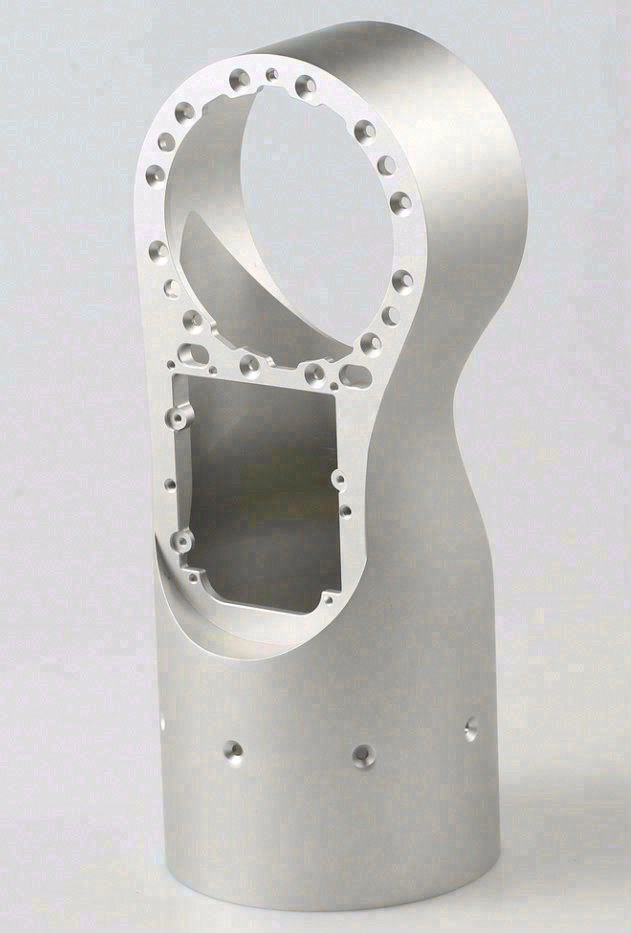
Unit cost falls, but not in a straight line — it falls in steps, and the size of each step tells you something about your part. The first and largest drop happens between one piece and the first small batch, because the entire setup cost stops being a per-part charge. The second drop happens when the process is stable enough to run unattended, with the machine feeding bar stock or a pallet of blanks instead of being tended between parts. The third happens when a dedicated fixture replaces a general-purpose vise, cutting the setup time per piece to nearly zero.
| Quantity tier | What dominates the cost | Where the savings come from |
|---|---|---|
| 1–10 pieces | Programming, fixturing, first-article inspection | Amortizing setup across more units |
| 10–100 pieces | Machine time, material, per-part inspection | Stable process, less re-checking |
| 100–1,000+ pieces | Material, tool wear, cycle time | Dedicated fixtures, multi-axis, automation |
If you understand these steps, you can read a quote and see where the supplier is pricing risk. A quote that barely drops between 50 and 500 pieces is a signal that the process has not been thought through for volume, or that the supplier is simply not passing the savings on.
The shape of the steps also identifies the part type. A part whose curve drops fast and early is setup-heavy: the money is in programming and fixturing, so the first quantity break is the big one. A part whose curve is nearly flat from the start is material-and-machine-time heavy: the price is already dominated by the recurring pile, and no amount of volume will move it much. Matching your part to one of these two profiles tells you where the remaining savings actually live, which is the difference between negotiating price and negotiating process.
Why does MOQ 1 piece matter for buyers?
An MOQ of 1 piece matters because it lets you separate the decision to validate from the decision to commit. You should be able to order two or three parts, put them in your assembly, measure them on your own bench, and only then release a production quantity. When a factory forces a minimum of a hundred pieces, you are being asked to bet production money on a design you have not yet proven.
This factory sets its MOQ at 1 piece for exactly that reason. The economics of a single prototype are not subsidized — a one-off genuinely costs more per part — but it is available, and it is the correct first step. The prototype's first-article report then becomes the baseline that production is held against, so the parts you qualify are the parts you receive in volume.
Read the reverse of this logic and you see what a high MOQ really is: a request that you bet production money on an unproven design. A supplier who insists on a hundred-piece minimum before you have held a single part in your assembly is shifting their own setup risk onto your invoice. MOQ 1 piece is not a marketing nicety — it is the structural difference between a manufacturer who earns the order by proving the part and one who locks the order before the proof exists.
When should you move from prototype to small batch to production?
The move from one stage to the next should be driven by what you have proven, not by a calendar. You are ready to leave the prototype stage when the part fits and functions in your assembly and the drawing is frozen. You are ready for a small batch when you have a real demand forecast and want to test the process repeatability across, say, fifty or a hundred parts. You are ready for production when the small batch passed with a comfortable process margin and you need the unit cost that only volume delivers.
Each stage has a different job. The prototype's job is to prove the geometry. The small batch's job is to prove the process, that the dimension comes in the same place every time, that the finish is right, that the supplier's documentation is complete. The production run's job is to prove the economics. Skipping a stage does not remove its risk; it just moves that risk downstream to where it is more expensive to fix.
Each stage also has its own number to watch. On the prototype, the number is dimensional — does the part measure to print, and does it fit the assembly. On the small batch, the number is statistical — does a critical dimension land in the same place across fifty parts, and what is the spread. On the production run, the number is financial — is the unit price at the floor the curve promised, and is the scrap rate what the process predicted. If you move to the next stage without its number in hand, you are advancing on a calendar instead of on evidence.
| Stage | What it proves | The gate before moving on |
|---|---|---|
| Prototype (1–10 pieces) | Geometry and fit | Drawing frozen, part fits in assembly |
| Small batch (10–100 pieces) | Process repeatability | Critical dimensions stable across the batch |
| Production (100+ pieces) | Economics | Unit price at the promised floor, scrap in range |
The table is the decision rule in one place: do not advance a row until the previous row's gate is closed. Most of the expensive mistakes in a machining program come from closing two rows at once — locking a design and a production order in the same purchase — and then paying to unwind them both.
When does a multi-axis setup or fixture cut unit cost?
Multi-axis machining and dedicated fixtures are often sold as speed, but their real economic effect is that they remove operations. A part that would need three setups on a 3-axis machine — each one a chance for error and a block of handling time — can sometimes be finished in one clamping on a 5-axis machine or a mill-turn center. The cycle might not be faster, but the total labor between the first operation and the finished part collapses.
This is why the decision is quantity-driven, not feature-driven. For a one-off, the extra programming of a multi-axis path may cost more than simply doing three setups. For a production run, avoiding those three setups across thousands of parts is pure savings. The same logic applies to fixtures: a general-purpose vise is cheap and flexible, but a dedicated fixture that holds six parts at once cuts the per-part handling and setup time to a fraction, and that investment is only justified if you will run enough parts through it.
The geometry side of the decision is just as important as the quantity side, and the two cross. A part with features on three faces may justify 5-axis even at a modest batch, because the setup savings are large relative to the programming cost. A part with all its features on one face may never justify 5-axis at any quantity, because there is nothing to re-fixture away. The correct question is not "is 5-axis better" but "how many setups does my part actually need, and what does each setup cost me at my quantity."
When does automation make sense?
Automation — bar feeders on lathes, pallet changers on mills, lights-out running — is the last lever you pull, not the first. It only pays when the process is already so stable that a machine can run without a person watching every part, because an unattended machine that produces scrap produces a lot of it before anyone notices.
The factory's equipment ladder is built for this. Swiss-type lathes and turning centers with bar feeders keep feeding stock through the night on long, stable runs. The Brother and Mazak-class machines are chosen for reliability that lets them run unattended once a process is proven. Automation is the reward for a mature process: it removes the last of the recurring labor cost, but it is only safe to apply after the first-article and small-batch stages have shown the process holds tolerance without intervention.
There are three conditions a process should meet before anyone lets it run lights-out. First, the process capability must be proven — a Cpk on the key characteristics that shows the process stays inside tolerance on its own. Second, the tooling must be predictable — tool life known well enough to change cutters on a schedule rather than after a failure. Third, the material must be consistent — incoming stock verified so a bar of off-spec alloy does not run through the night as scrap. Skip any one of these and the unattended machine becomes the most efficient scrap generator in the building.
Which parts are worth machining at low volume?
Not every part should be rushed to volume. Some parts are genuinely low-quantity by nature — spare parts for a discontinued machine, a specialized tool for a research project, a bracket for a custom automation cell — and for those, the correct question is not "how do I get this cheap" but "how do I get this right the first time."
Low-volume precision machining parts are where the setup-heavy suppliers earn their keep, because the part is simple enough or the quantity is low enough that the process-building cost dominates. The value you gets at low volume is not a low unit price; it is a correct part, with a dimensional report, delivered on a date that was quoted honestly. If a supplier is good at low volume, they are almost certainly good at volume — the reverse is not always true.
The correct buying metric at low volume is therefore not price per part but cost per correct part. A one-off spare that arrives wrong costs the price of a second one-off plus the downtime of the machine waiting on it. A one-off that arrives right the first time, with a report proving it, is cheap at almost any quoted price. At low volume you are not buying metal and machine time — you are buying the certainty that the single part you need will work, and certainty is what the setup-heavy shop is actually selling.
| Low-volume part type | The cost you are really managing | The metric that matters |
|---|---|---|
| Discontinued-machine spare | Downtime while the part is missing | Days to a correct replacement, not unit price |
| Research or lab component | Wrong geometry invalidating an experiment | First-part dimensional proof |
| Custom automation bracket | Assembly fit across several mates | Fit on the bench, documented |
| Pre-production validation part | Committing to volume on a bad design | First-article report as the production baseline |
The pattern across all four rows is the same: at low volume the failure is not that the part is a few dollars too expensive, it is that the part is wrong or late. Buy accordingly, and judge the supplier on how they prevent the failure, not on how they shave the unit price.
How do you read a quantity-break quote?
A quantity-break quote — 5, 50, 500, 5,000 pieces — is a map of where a supplier's costs really live, and you should read it like one. If the unit price barely moves between 5 and 50, setup cost is being re-charged at every tier. If it drops steeply between 50 and 500, the supplier is amortizing fixturing and letting the process stabilize. If it barely moves again between 500 and 5,000, you may be at the floor where material and machine time dominate, and further savings would come from a design change, not from ordering more.
Ask for the tier that matters to your forecast, not just the tier you will order this month. A supplier who is honest about the curve will tell you where the next real price drop sits and what it takes to reach it — a fixture, a material change, a design tweak. A supplier who simply discounts in a straight line is probably quoting a number, not a process.
Three shapes show up often enough to be worth naming. The early cliff — a steep drop between the smallest tiers, then a long flat — marks a setup-heavy part that is cheap once the process exists. The slow glide — a gentle fall across every tier — marks a part already dominated by material and machine time. The re-charged step — where the price drops, then flattens, then drops again at each tier boundary — marks a supplier re-billing setup at every quantity instead of amortizing it once. Each shape points to a different next question, and asking it is the difference between buying a number and buying an understanding.
What is CNC machining?
CNC machining is the subtractive manufacturing of parts on computer-numerically-controlled milling, turning, and grinding equipment. A cutter removes material from a workpiece along a programmed toolpath to produce a part that meets a drawing-defined geometry, tolerance, and surface finish. "CNC" means the tool path is numerically controlled rather than hand-operated.
The rest of this guide turns that definition into a buyer's checklist for this shop — what to verify before you commit, and how the numbers on the drawing actually reach the part.
The discipline separates into milling (the cutter rotates and the workpiece is fed; prismatic geometry), turning (the workpiece rotates and the tool is fed; rotational geometry), and precision grinding / wire EDM (the tightest tolerances on critical features). A plant that produces CNC machined parts end-to-end runs all three.
The output of CNC machining is a part that meets the drawing — geometry, tolerance, surface finish, and material certificate — and is documented to a quality plan (FAI for general work, PPAP for automotive-bound parts, IMDS for material data). That is the answer to "what is CNC machining": a numerically-controlled subtractive process that produces a part to a drawing, with the quality documentation that lets the part enter an assembly.
What are the three lead-time tiers?
Lead time is set by complexity, not by a blanket promise. Parts fall into roughly three tiers: about 3 days for simple parts with few operations and no finishing, about 7 days for standard parts with multiple operations, and about 30 days for complex parts — those that run 10 to 20 process steps or require surface finishing or heat treatment. A complex part with anodizing or plating will always land in the longer tier, because each secondary process adds its own queue.
This matters to the quantity decision too: a long-lead, complex part is exactly the kind of part you should qualify with a one-piece prototype before committing a 30-day production window, because discovering a design problem mid-production on a 30-day part is far more costly than catching it on the prototype.
Lead time also has its own quantity curve, and it runs opposite to price. A prototype in the 3-day tier is fast and expensive per part; a production run in the 30-day tier is slow and cheap per part. The two curves cross in a way that matters for planning: you can often trade a little lead time for a much lower unit price, or trade a little unit price for a much earlier ship date. The buyer who only ever asks "what does it cost" and never "and what does it cost to have it sooner" is leaving the schedule side of the curve unread.
For the schedule side of the same curve — which tiers carry which waits and how to plan around a fixed date — see the precision machining parts lead time guide.
What should you check before you order?
Whether you buy from this factory or another, these are the questions that separate a manufacturer who understands your cost curve from one who is guessing at it. Ask them of any supplier — including this one.
If a full factory audit feels heavy for a first order, these questions are the lightweight version of the same audit — they take ten minutes in an email thread and they surface the same information a site visit would, because a supplier who cannot answer them in writing almost certainly cannot satisfy them on the floor either.
- Can they show the machine list, not a stock photo? A real manufacturer names models and counts; a trading desk recycles brochures.
- Do tolerances come with measurement evidence? Ask for a CMM report or an SPC chart from a real job, not a capability sentence.
- Is the certificate number verifiable? Real ISO and IATF certificates carry numbers you can check with the registrar.
- Will they show the quantity break-even? A supplier who can explain where your price drops, and why, is pricing a process, not a number.
- Do they own the secondary operations? If anodizing or heat treatment is outsourced, the shop should say so and name the partner.
Deeper dive: How to choose a precision machining parts supplier online — the same checks, run as a timed 30-minute quantity screen before you commit a first order.
How does material choice move the cost curve?
Material is the one cost that scales almost linearly with quantity, which makes it the quiet lever of the quantity cost curve. The price difference between a kilogram of aluminum and a kilogram of stainless steel is fixed; what changes with quantity is how much that difference matters. On a five-piece order it is a rounding error. On a fifty-thousand-piece order it is the difference between two unit prices that sit on opposite sides of your budget.
Material also moves the curve through machinability, which is the part of the decision buyers feel but rarely name. Machinability decides how fast the cutter can run, how fast the tool wears, and whether the part needs a stress-relief or deburring step between operations. A part that machines in minutes in one alloy can machine in tens of minutes in another, and those minutes are recurring cost on every single unit.
| Material | Density (g/cm³) | Machinability profile | How it sits on the curve |
|---|---|---|---|
| 6061-T6 aluminum | 2.70 | Fast cutting, long tool life | The low-unit-cost workhorse from prototype to production |
| 7075-T6 aluminum | 2.81 | Fast cutting, higher strength | Where aluminum stiffness is not enough |
| 304 stainless steel | 8.00 | Hard, poor heat transfer, fast tool wear | Corrosion parts, with a higher recurring machine-time cost |
| 316 stainless steel | 8.00 | Cuts harder than 304 | Chloride and medical environments |
| 360 free-machining brass | 8.50 | Among the easiest metals to cut | Small parts, fine threads, tight tolerances at low cost |
| C110 copper | 8.92 | Soft and gummy, moderate cutting | Conductive and thermal parts, heavier machine time than brass |
| Ti-6Al-4V titanium | 4.43 | Very slow cutting, hard on tooling | Aerospace and medical, at the highest machine-time end |
| POM / PEEK plastics | 1.41 / 1.32 | Easy to cut, low density | Lightweight and insulating parts at low material cost |
Material and quantity are one decision, not two. The right metal for a prototype is often not the right metal for production: a prototype in 6061-T6 proves the geometry cheaply, while the production run moves to a stronger or more corrosion-resistant alloy only after the design is frozen. The buyer who reads a quote this way can ask the manufacturer where the material break-even sits — the quantity at which switching alloys pays for itself in machine time or scrap — instead of accepting the alloy the drawing happens to name.
How does tolerance tighten the price ladder?
Tolerance is the steepest rung on the price ladder, because every tightening of the band changes how the part is made and how it is measured. A loose tolerance is cut in one pass at standard feeds. A tight tolerance is cut slower, held with more careful workholding, measured more often, and sometimes finished on a grinder instead of a mill. Each of those changes is a cost, and each lands on the unit price.
The ladder is worth seeing in numbers because most drawings over-tolerance the wrong features. A part that calls ±0.003 mm (milling) / ±0.002 mm (turning) on a surface that only needs to clear a neighboring component is paying grinding money for a clearance face. The standard general tolerances — the ISO 2768 family — exist precisely so a drawing can stay loose everywhere except the two or three features that control function.
| Tolerance band | Typical grade | How it is produced | Relative cost |
|---|---|---|---|
| ±0.1 mm and looser | ISO 2768-m / -c class | Standard milling and turning in one pass | Baseline |
| ±0.02 to ±0.05 mm | ISO 2768-f class | Slower feeds, careful workholding, in-process checking | Meaningfully higher |
| ±0.003 mm (milling) / ±0.002 mm (turning) | Shop milling / turning limit | Finish passes, temperature awareness, CMM verification | High |
| ±0.002 mm | Shop grinding limit | Surface / cylindrical / centerless grinding | Highest |
Tolerance and quantity interact the same way setup cost does: a tight tolerance costs disproportionately more at low volume, because the slow feeds, the careful fixturing, and the extra inspection all land on a handful of parts with nothing to amortize them. At volume, that discipline spreads across thousands of units and the premium shrinks. The cheap way to lower a curve is not to loosen every tolerance — it is to tolerance selectively, tight only where the function demands it, and let the rest ride a general grade.
The test for which features earn a tight tolerance is simple: does another part locate, seal, or rotate against this surface. A bearing bore, a press-fit, a seal face, a dowel hole — those earn their tight band because the assembly's function depends on them. A clearance face, a cosmetic outside surface, the bottom of a blind pocket — those rarely do, and tolerancing them tight buys nothing but cost. A drawing that tolerances two or three functional features tightly and everything else at a general grade will almost always machine for a fraction of the price of the same part toleranced tight everywhere, with no measurable difference in how it works.
How does surface finish (Ra) change cost?
Surface roughness, quoted as Ra in micrometres, is a separate ladder from tolerance, and it is one of the most common places a drawing quietly adds cost. Each step down the Ra scale usually means a slower feed, a second operation, or a move from machining to grinding, and each step therefore changes the recurring cost of every part in the run.
| Surface finish | Typical process | Where it is actually needed |
|---|---|---|
| Ra 3.2 µm | Standard milling and turning | General faces, non-sealing, non-sliding surfaces |
| Ra 1.6 µm | Finer feeds, finish passes | Sliding and locating faces, some seal surfaces |
| Ra 0.8 µm | Finish machining or lapping | Bearing bores, sealing and mating surfaces |
| Ra 0.4 µm and finer | Precision grinding | High-precision fits, optical and instrumentation surfaces |
The quantity lesson is that Ra, like tolerance, should be specified only where it earns its keep. A seal surface at Ra 0.8 µm is worth every cent; a cosmetic outside surface at Ra 0.8 µm is a tax the drawing imposes for no functional return. Surface finishing — anodizing, plating, powder coating — stacks on top of the machined Ra, so a part that is both finely ground and then anodized carries two finishing costs that you should see as separate line items on the quote, not one lump sum.
What design-for-manufacturing rules keep the curve low?
Design-for-manufacturing is the cheapest lever in the whole curve, because it changes the model instead of changing the process, and changing the model costs drawing time, not machine time. A few rule-of-thumb calls, made after the prototype proves the function and before the production run is locked, can remove an operation, a tool change, or a whole secondary process.
- Inside corner radii. An inside corner can never be sharper than the cutter that makes it. Specify a radius close to or larger than the tool radius and the corner cuts in one pass; leave it sharp and the part needs slow finishing, a smaller cutter, or EDM, all of which cost more.
- Hole depth. A hole with a depth-to-diameter ratio up to about 4:1 drills in one shot. Beyond that, the drill needs pecking or a gun-drill, and the cost per hole climbs with every extra diameter of depth. Deep cross-holes that break out inside a part are another cost trap.
- Wall thickness. A wall that is too thin flexes under the cutter and chatters, which ruins the finish and the dimension. Keeping aluminum walls around 0.5–1 mm and steel walls around 1–1.5 mm is a safe floor; thinner is possible but costs more to hold straight.
- Thread relief. A blind tapped hole needs a little clearance at the bottom so the tap does not bottom out and snap. Leaving a relief, or threading only the length that actually carries load, is a free change that avoids a broken tap and a scrapped part.
These rules matter to the quantity curve because their payoff scales with volume. A design change that saves ten seconds of cycle time is invisible on a five-piece order and worth a production line on a fifty-thousand-piece one. The manufacturer should be able to point at the specific features that are driving your price and quote the savings from changing each one.
The timing of the DFM pass is part of the discipline. Run it too early and you optimize a design that has not proven its function yet; run it too late and you have already locked a production run around an inefficient geometry. The window that matters is after the prototype fits and before the production order is placed — exactly the window where a build-to-print manufacturer should be offering changes with numbers attached, unprompted.
How do Incoterms and freight sit on the curve?
Freight has its own quantity curve, and it runs parallel to the machining one. At prototype quantity, parts travel by express courier — fast, but the per-part freight cost is high. At production quantity, parts travel consolidated by sea or air freight, and the freight per unit collapses for the same reason the setup cost does: a fixed charge spread across more units.
Incoterms exist to define who owns that freight cost and its risk at each point in the journey. Under EXW you collect the goods at the factory and carries everything from there. Under FOB the seller covers the leg to the loading port. Under CIF the seller covers freight and insurance to the destination port. Under DDP the seller carries the goods all the way to your door. None of these change the part cost — they change which party pays for the movement and who bears the loss if a shipment is damaged in transit, and that allocation should be agreed before the quote is signed, not discovered at the border.
The quantity connection is that freight is a one-time-per-shipment cost that amortizes exactly like setup does. A buyer ordering one piece pays freight as if it were a setup charge on a single unit. A buyer ordering a full pallet pays almost nothing per part for the same crossing. When you compare two quantity-break quotes, ask whether the freight and the Incoterm are held constant across the tiers — otherwise you are comparing two different curves and the difference is not in the machining at all.
Where does the quantity cost curve fail?
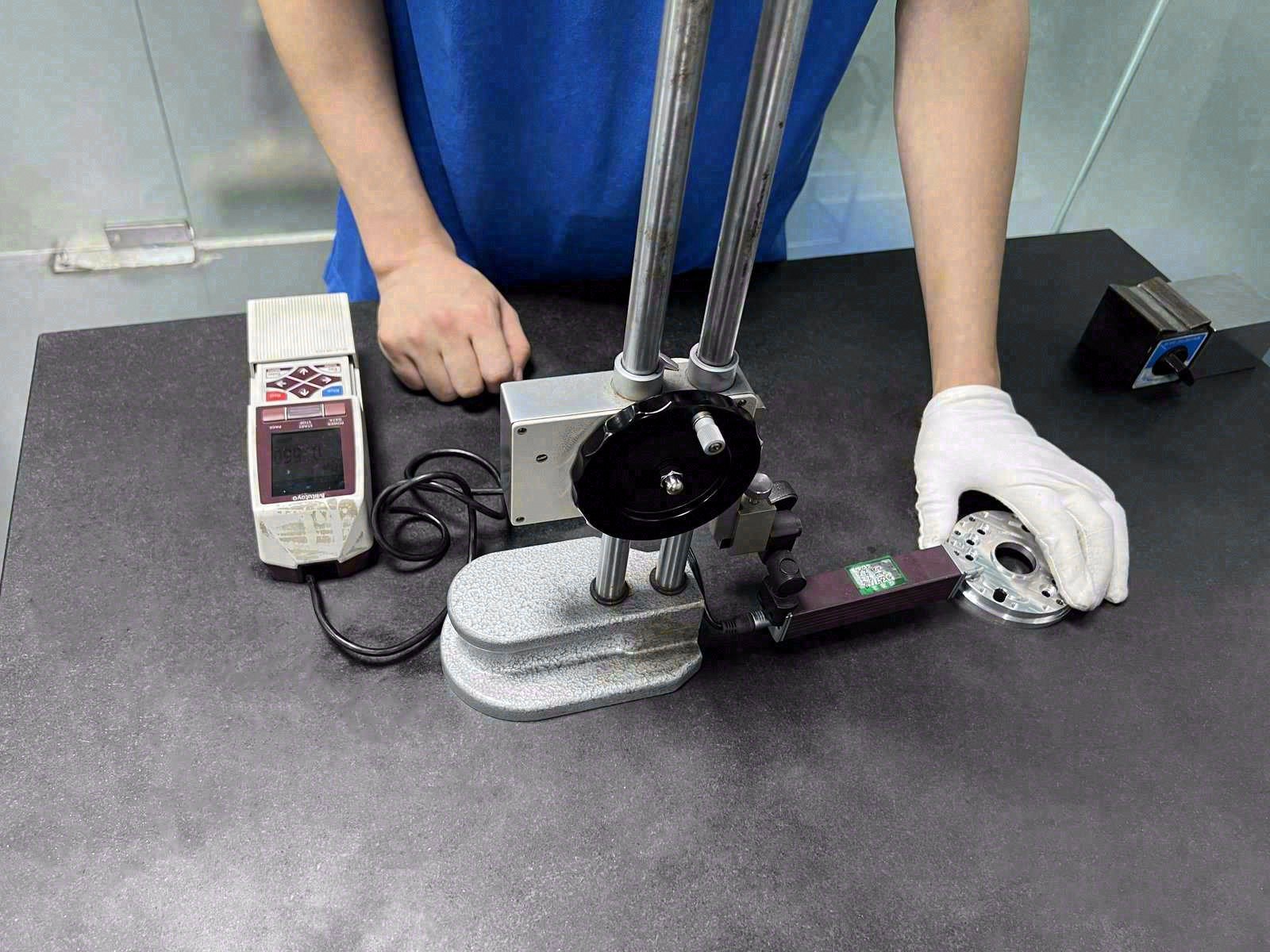
The curve is a useful model, and like every model it has conditions where it stops telling the truth. If you know the failure modes, you can spot a quote or a supplier that is about to break the promise of falling unit cost.
- The straight-line discount. If a supplier's unit price falls in a smooth straight line with no step changes and no explanation, it is probably a number, not a process. A real curve has steps where setup amortizes, where fixturing is justified, and where material becomes the floor.
- The missing equipment. A curve that keeps falling into high volume only stays true if the factory owns the bar-fed lathes, pallet changers, and multi-axis centers that make high volume cheap. A supplier whose floor tops out at general-purpose machines cannot honestly reach the bottom of that curve.
- The un-frozen design. Ordering production quantity before the drawing is frozen moves design risk into the most expensive place it can land. The curve assumes the part is final; it says nothing about the cost of reworking ten thousand parts with a changed feature.
- The un-machinable material. Some material-and-tolerance combinations never reach a low floor, no matter the quantity, because the machine time and tooling cost are intrinsic. The curve flattens early, and the honest supplier says so instead of promising a floor that does not exist.
- The single source. Falling unit cost is also rising dependence. The deeper the quantity discount, the harder it is to move the part later, so your own curve should include a second source that can be qualified on the same drawing.
These failure modes are not reasons to distrust the curve — they are reasons to interrogate it. Your question is the same at every quantity: show me, in numbers, why this price drops the way it does. A supplier who can answer that is pricing a process. One who cannot is pricing a hope.
Guides
Each guide below goes deeper on one decision than the overview above can.
- Precision machining parts vs alternatives — which material-process pair wins at your quantity, from one-off printing to production casting and molding.
- How to choose a precision machining parts supplier online — a 30-minute screen built on the quantity curve, from two-quantity probes to the engineering response.
- Precision machining parts lead times — what drives the 3 / 7 / 30-day tiers, why finishing adds a second clock, and how to plan a date that holds.
What this shop actually runs
A buyer asking for capability evidence should get a specific answer. The facility behind this guide operates 100+ CNC machines across a 6,800 m2 plant in Dongguan, China, with 100+ staff. The machine list by category:
- 5-axis machining centres (10+) - Mazak VARIAXIS I-600 (510/910/510 mm travel, 12,000 rpm, 22 kW, 71.6 N·m, 30-tool BT40) and Mazak INTEGREX I-250H S (B-axis 0.0001°, 24 kW, 124 N·m, 38-tool HSK-A63). Specified for compound-angle parts, single-setup multi-face prismatic work, and aerospace fittings where datum transfer loss is unacceptable.
- 3-axis / 4-axis machining centres (50+) - Brother SPEEDIO S500Z2N / S700Z2N (10,000 rpm, 14/21-tool ATC, 0.7 s tool-to-tool, Z-axis 2.2 G) and Mazak VCE-430A L / VCE-570C L (10,000 rpm, 118 N·m, 24-tool ATC). Specified for prismatic parts, plates, brackets, housings.
- Over 100 machines on one floor — Mazak / Brother / Tsugami / Star / Citizen class across 6,800 m², with 50+ 3-axis, 20+ 4-axis, 20+ 5-axis, 25+ lathes, 7+ grinders and 20+ inspection instruments.
- Tolerance: ±0.002 mm, verified on Hexagon CMMs. Capability is reported per characteristic: Ppk ≥ 1.67 in the initial study and Cpk ≥ 1.33 in production on key and special characteristics (≥ 1.33 on general characteristics). Every report names the feature, its tolerance band, the sample size, the sigma method, and the study window.
- Certified under ISO 9001:2015, IATF 16949:2016 (design excluded) and ISO 14001:2015 — Dongguan Zhuohang Ltd is the invoicing entity behind them.
- Order terms: MOQ 1 piece, lead times of roughly 3 / 7 / 30 days depending on complexity.
- Machine highlights - VARIAXIS I-600: one-setup multi-face 5-axis + MAZA-CHECK auto-calibration; INTEGREX I-250H S: DONE-IN-ONE mill-turn, B-axis 0.0001° + Ai thermal shield; SPEEDIO S500Z2N / S700Z2N: Z-axis 2.2 G + 0.7 s ATC; Swiss-type: guide-bush switchable + 0.1 µm resolution.
Tolerance bands held: ±0.003 mm on CNC milling, ±0.002 mm on CNC turning, ±0.002 mm on precision grinding and wire EDM. Capability indices: Ppk >= 1.67 initial on key characteristics; Cpk >= 1.33 ongoing in production.
Certifications: ISO 9001:2015 (116024/A/0001/UK/En), IATF 16949:2016 (131941/A/0001/SM/En, design clause 8.3 excluded - disclosed openly), ISO 14001:2015 (116024/B/0001/UK/En). Certificates are issued to Dongguan Zhuohang Ltd (USCC 91441900MA4UWT6X39, established 2005).
Service area: Austria, Belgium, the Czech Republic, Denmark, France, Germany, Greece, Hungary, Ireland, Italy, the Netherlands, Spain, Sweden and the United Kingdom in Europe; Brazil, Canada, Mexico and the United States in the Americas; China, Israel, Japan, Singapore and Sri Lanka in Asia; Australia and New Zealand in Oceania; and South Africa in Africa. Based in China, serving customers worldwide.
Contact: Felipe Iglesias, [email protected], +86 13126536955.
Want to see your part's cost curve?
Send your drawing to [email protected] or call +86 13126536955 for a quantity-break quote and a DFM review.
Frequently Asked Questions
Why is the first machined part always the most expensive?
In short, The first part carries the full setup cost — CAM programming, tool selection, workholding, and first-piece inspection — all of which are one-time charges. That cost is spread across every unit, so the first piece absorbs it alone, and each additional piece dilutes it.
What is the minimum order quantity for precision machining parts?
The MOQ is 1 piece. You can order a single prototype, a short validation run, or a production batch from the same factory, which lets you prove a design before you commit money to volume.
When does a multi-axis setup actually reduce unit cost?
In short, Multi-axis machining pays off when a part would otherwise need several setups or several machines. Holding a complex part in one clamping removes the time and error of re-fixturing, which lowers cost as soon as quantity is high enough to justify the programming.
What tolerances can the factory hold?
In short, Milling and turning hold ±0.003 mm (milling) / ±0.002 mm (turning), and precision grinding holds ±0.002 mm. Critical dimensions are verified on Hexagon CMMs, with process capability Ppk ≥ 1.67 at the initial study on key characteristics and ≥ 1.33 on general characteristics.
What are the lead times?
Lead times fall into roughly three tiers — 3, 7, and 30 days — set by part complexity and the number of process steps. Complex parts can run 10 to 20 steps, and any surface finishing pushes a part toward the longer tier.
Which materials can be machined?
Aluminum, stainless steel, brass, copper, titanium, and magnesium, plus engineering plastics. Incoming material is verified by XRF against the mill certificate so the alloy you specify is the alloy you receive.
How do I get a quantity-break quote?
Send your STEP model or 2D drawing to [email protected] and state your target quantities — prototype, small batch, and production. The quote is returned with a design-for-manufacturing review, usually within one business day.
How exactly does material choice move the cost curve?
In short, Material is the one cost that scales almost linearly with quantity, so a per-kilogram difference between alloys becomes meaningful only as volume rises. Material also sets machinability — how fast the part cuts and how fast tools wear — which changes the recurring machine-time cost on every unit.
How does tolerance affect the price at low quantity?
In short, Tight tolerance costs disproportionately more at low quantity, because the slower feeds, careful fixturing, and extra inspection all land on a handful of parts with nothing to amortize them. The cheapest way to keep a curve low is to tolerance selectively — tight only on the two or three features that control function, and a general grade everywhere else.
What is the difference between prototype price and production price?
In short, The prototype price includes building the process — programming, tooling, workholding, and first-article inspection — all on one part. The production price includes only running that process.
What is surface finish Ra and how does it change cost?
In short, Ra is the arithmetic mean surface roughness, quoted in micrometres. Standard milling and turning land around Ra 3.2 µm; each step down to 1.6, 0.8, or 0.4 µm usually adds a slower feed or a second operation such as grinding.
Do you use MIL-STD-105E or ANSI/ASQ Z1.4 sampling inspection?
In short, MIL-STD-105E is the U.S. military sampling inspection standard published in 1989; it specifies acceptable quality limit (AQL) sampling plans for lot-by-lot inspection.
Standards referenced on this page
- IATF 16949:2016 — Automotive quality management system standard
- ASTM B211/B211M-19 — Standard Specification for Aluminum-Alloy Rolled or Cold Finished Bar, Rod, and Wire
- ASTM A582/A582M-12 — Standard Specification for Free-Machining Stainless Steel Bars